Use this Miami pest season guide the way locals use the weather: as a calendar you can plan around. South Florida runs on a dry season from roughly November to April and a wet season from May through October, with hurricane season layered over the back half of the year. Each stretch pushes a different set of pests toward your house — and the same pattern plays out from Homestead to Aventura. When one of them gets past the do-it-yourself stage, call (772) 783-1112 and get connected with an independent local pest pro who is seeing the same thing across the county.
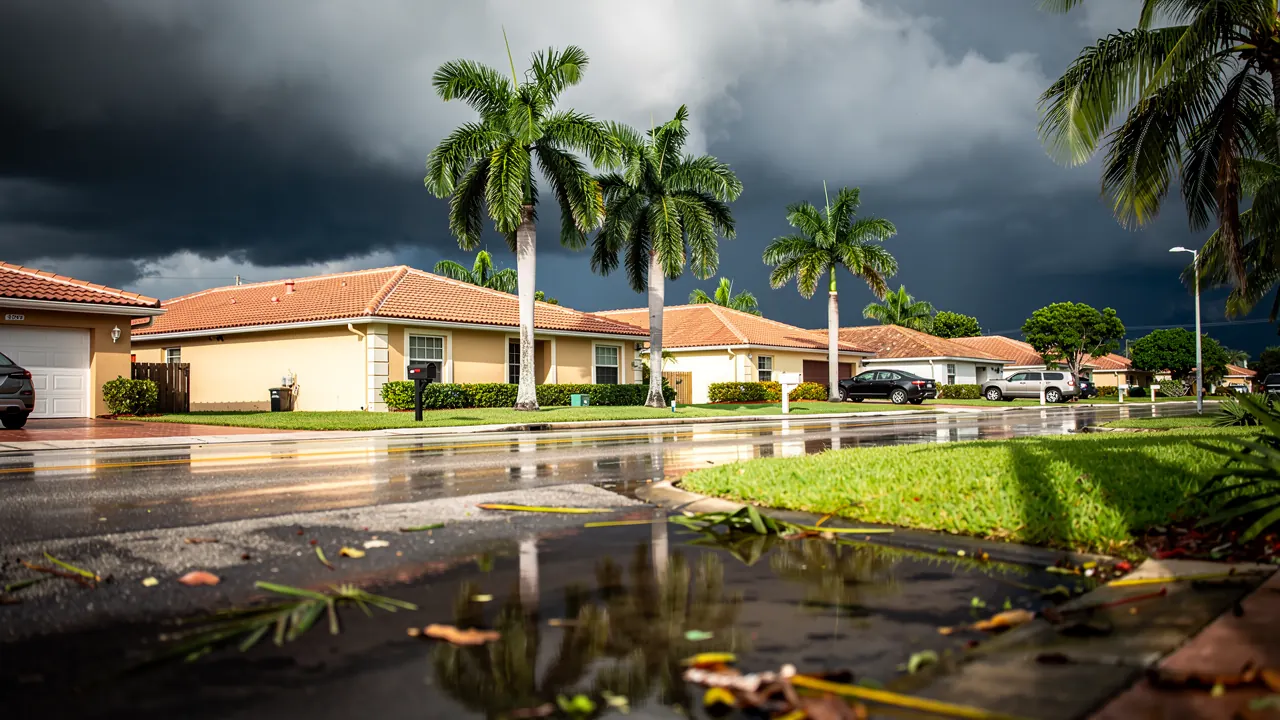
Afternoon storms flood nests and push ants, roaches, and rats toward dry ground — your house. Describe what showed up and get help.
Call (772) 783-1112 NowSpring: Termite Swarm Season in Miami
The year's first big pest event arrives before the rain. According to University of Florida (UF/IFAS) entomologists, Asian subterranean termites — an invasive species common from Key West to West Palm Beach — begin swarming in early March, usually at dusk. Formosan subterranean termites follow in late April to early May, and West Indian drywood termites become active in April. If you see clouds of winged insects around porch lights on a warm evening, or piles of shed wings on a windowsill, that's swarm season.
Swarmers inside don't automatically mean the house is infested, but they're the cheapest early warning you'll ever get. Collect a few in a sealed bag, note where the wings piled up, and have a pro identify the species — subterranean and drywood termites are treated very differently. The Miami termite control page explains the options. Seeing swarmers indoors right now? Call (772) 783-1112.
Rainy Season: Ants, Roaches and Mosquitoes
Once the daily afternoon storms start in May, the ground under your yard stays saturated for months. Ant colonies flooded out of the soil relocate — often into wall voids, kitchen cabinets, and the gap where the slab meets the stucco. Big American cockroaches, the "palmetto bugs" every Miami native knows, move up out of flooded sewers, mulch beds, and palm trunks and come in under doors and through plumbing gaps. In condos and apartments, German cockroaches don't care about the weather, but rainy-season humidity helps them breed faster.
Mosquitoes are the other wet-season constant. Miami-Dade County's own mosquito control program calls May through October the peak breeding season and asks residents to "drain and cover" — empty anything that holds water, including bromeliads, gutters, plant saucers, and boat covers. Yard treatments help most when standing water is handled first.
If roaches are showing up in daylight or you're finding them in more than one room, that's an established population. The Miami roach control page covers palmetto bugs and German roaches, and mosquito and ant service is on the Miami pest control services page. Call (772) 783-1112 to describe what you're seeing.
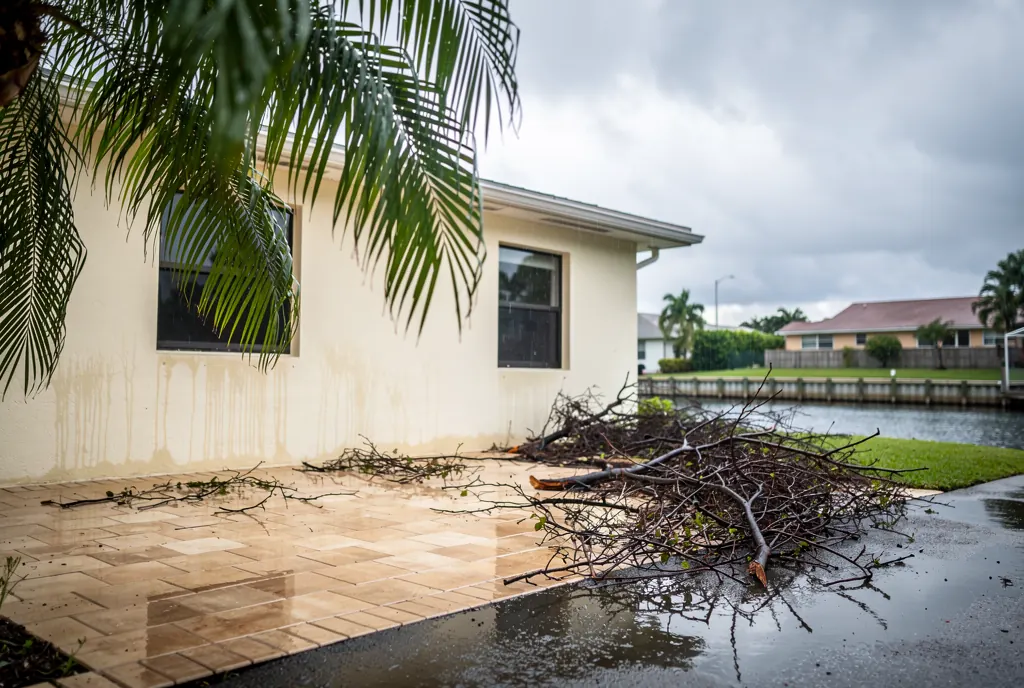
Storm damage opens roofs and soffits to rodents and insects. Describe what you're seeing post-storm and get a local pro to check it.
Call (772) 783-1112 NowHurricane Season: Storm Debris, Flooding and Rats
Hurricane season officially runs June 1 through November 30, and a named storm doesn't have to make landfall to change the pest picture. Flooded canals and storm drains push rats and roaches into higher, drier ground — which is often your garage or attic. Piles of downed fronds and branches waiting for bulk pickup make perfect harborage, and roof damage opens new gaps at the tile line and soffit vents that roof rats find quickly.
After a storm, walk the roofline and the outside of the house looking for new openings, keep debris piles away from the walls, and listen at night for scratching overhead. Droppings in the attic or garage mean rats are already in. The Miami rodent control page covers trapping and sealing, and cockroach spikes after flooding are on the roach page. Hearing something in the ceiling? Call (772) 783-1112.
Late Summer and Fall: Wasp and Yellow Jacket Nests
Months of heat and rain give stinging insects a long building season. By late summer, paper wasp nests under eaves and inside pool-enclosure frames have grown, and yellow jacket colonies in the lawn are at their most defensive when the mower passes over them. Don't knock down or plug a nest yourself. The Miami-Dade wasp and bee removal page explains how to tell what you have — then call (772) 783-1112 with the nest's location.
Dry Season: The Window to Get Ahead
From roughly December through February, cooler, drier air slows most outdoor insects down. That makes it the best time of year to get ahead: seal rodent entry points before the next storm season, have a pro look for termite activity before the March swarms, and set up a regular general pest plan so the May ant and roach wave hits a barrier instead of an open door. Typical costs are laid out in the pest control cost guide, and every service is on the Miami-Dade pest control home page.
Whatever season it is in Miami-Dade, the pros reached through this free call-connection service are independent local businesses you hire directly. Call (772) 783-1112, describe what's going on, and get ahead of the next season.
A trail that rebuilds, swarmers every evening, droppings anywhere — patterns mean it's established. Describe yours and get it handled.
Call (772) 783-1112 Now